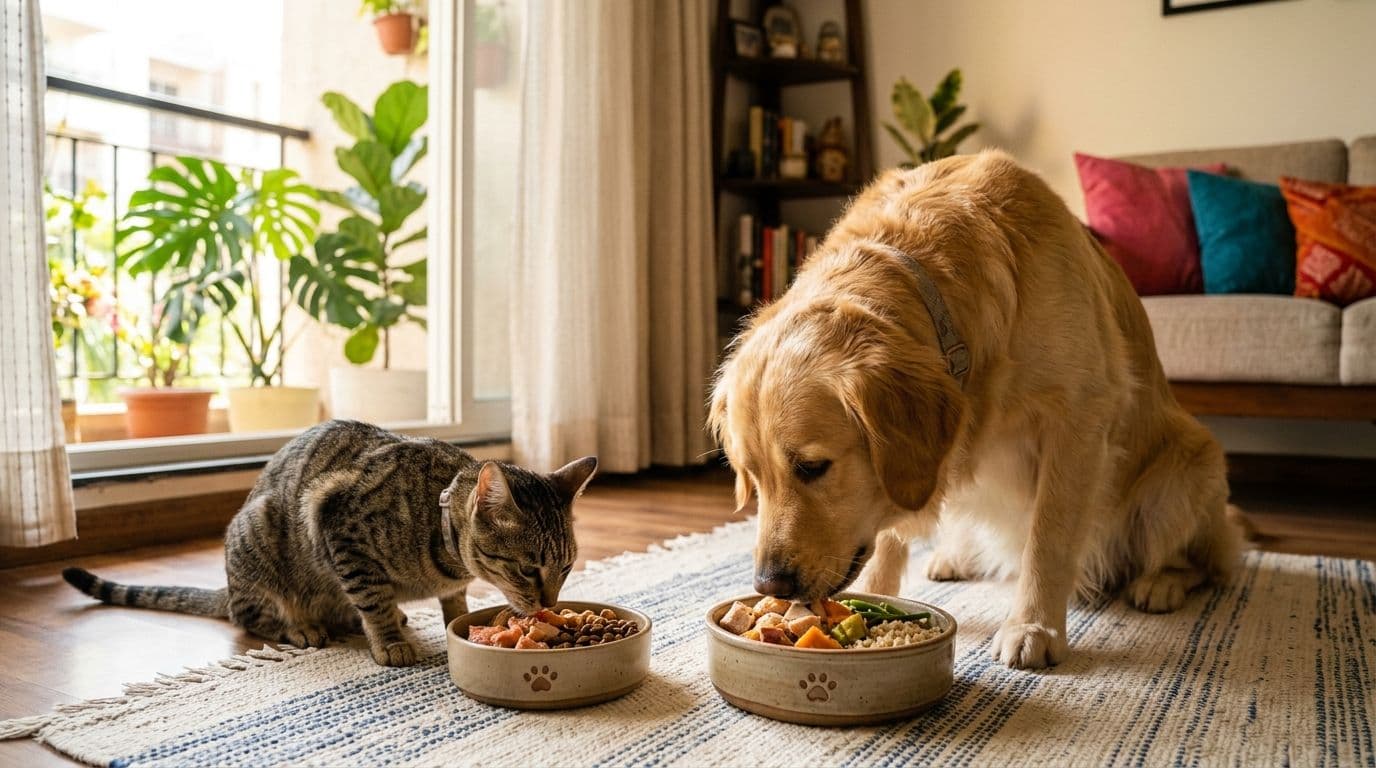
What you feed your pet shapes their coat condition, energy levels, immune strength, and lifespan. For Indian pet owners, the choice between commercial kibble, raw diets, and home-cooked meals can be genuinely confusing — especially with conflicting advice, variable ingredient availability across cities, and limited access to qualified veterinary nutritionists. This guide explains what balanced nutrition actually means for dogs and cats, how to read a pet food label critically, and which common Indian feeding habits cause slow but real harm that owners often fail to connect to diet. Use this as a starting point, not a prescription: every pet's needs differ by age, breed, activity level, and health status. Note: For a diet plan tailored to your specific pet, consult a registered veterinarian or a certified animal nutritionist.
Understanding the Pillars of Pet Nutrition
A truly balanced pet diet hinges on six fundamental nutrient categories: proteins, fats, carbohydrates, vitamins, minerals, and water. Proteins are the building blocks for muscles, skin, hair, and enzymes, essential for growth and repair. High-quality animal-based proteins are crucial for both dogs and cats, with cats having a higher protein requirement.
Fats provide concentrated energy, aid in vitamin absorption, and are vital for healthy skin and a shiny coat. Essential fatty acids, like Omega-3 and Omega-6, play a significant role in reducing inflammation and supporting brain function. Carbohydrates, while often misunderstood, offer readily available energy and dietary fiber, contributing to digestive health. Sources like rice, oats, and sweet potatoes are common in pet foods.
Proper nutrition is not just about feeding; it's about fostering a lifetime of health and happiness for our beloved companions. Every meal is an opportunity to strengthen their vitality and deepen our bond.
Commercial vs. Homemade Pet Food in India
Choosing between commercial pet food and homemade meals is a common dilemma for Indian pet owners. Commercial pet foods, when chosen wisely, offer convenience and are formulated to be nutritionally complete and balanced, adhering to standards set by bodies like AAFCO (Association of American Feed Control Officials) or FEDIAF (European Pet Food Industry Federation). Reputable brands available in India invest in research and quality control, ensuring consistent nutrient profiles.
Homemade diets, on the other hand, offer control over ingredients and can be beneficial for pets with specific allergies or sensitivities. However, formulating a truly balanced homemade diet requires extensive knowledge of pet nutrition to avoid deficiencies or excesses. Simply feeding leftover dal-roti or chicken scraps is insufficient and can lead to serious health issues over time. If opting for homemade, work closely with a veterinary nutritionist to create a balanced recipe.
Tailoring Diets to Your Pet's Life Stage and Breed
A pet's nutritional needs evolve significantly throughout their life. Puppies and kittens require diets rich in protein and calories to support rapid growth and development. Adult pets need maintenance diets that provide sufficient energy without leading to weight gain. Senior pets, often less active, may benefit from lower-calorie diets with added joint support and easily digestible proteins.
Breed-specific considerations also play a role. Large breeds, like Labradors or German Shepherds, are prone to joint issues and may require diets with specific calcium-to-phosphorus ratios and joint-supporting supplements from puppyhood. Small breeds, such as Chihuahuas or Pomeranians, have higher metabolic rates and often need more calorie-dense food. Discussing your pet's specific breed and age with your vet is crucial for a tailored diet plan.
Common Feeding Mistakes to Avoid for Indian Pets
Overfeeding and Underfeeding: Regularly monitor your pet's weight and body condition score. Consult your vet to determine the ideal caloric intake based on their age, breed, and activity level, avoiding both obesity and malnutrition.
Feeding Human Food Scraps: Many human foods are toxic to pets (e.g., onions, garlic, chocolate, grapes) or simply too high in fat, salt, or spices, leading to digestive upset, pancreatitis, or long-term health problems. Stick to pet-specific treats.
Inconsistent Feeding Schedules: Establish a consistent feeding routine. Irregular feeding can lead to digestive issues, anxiety, and even behavioral problems in some pets. Most adult pets thrive on two meals a day.
Ignoring Hydration: Always provide access to fresh, clean water. Dehydration can quickly become a serious health concern, especially during India's hot summers. Consider multiple water bowls or a pet water fountain.
Sudden Diet Changes: Any changes to your pet's diet should be gradual, typically over 7-10 days, by mixing increasing proportions of the new food with decreasing amounts of the old. This helps prevent digestive upset.
Decoding Pet Food Labels: What You Need to Know
Understanding pet food labels is paramount to making informed choices. Look for the 'guaranteed analysis,' which lists the minimum percentages of crude protein and fat, and maximum percentages of crude fiber and moisture. While these provide basic information, they don't tell the whole story about ingredient quality or digestibility.
The ingredient list is ordered by weight, so the first few ingredients are the most abundant. High-quality animal protein sources (e.g., 'chicken meal,' 'lamb,' 'fish') should be among the top ingredients. Be wary of vague terms like 'meat meal' or excessive fillers. Also, check for an AAFCO or FEDIAF statement, indicating the food is formulated to meet nutritional levels for a specific life stage (e.g., 'complete and balanced for adult maintenance').
Common Questions
What are the essential nutrients for pets? Essential nutrients for pets include proteins, fats, carbohydrates, vitamins, minerals, and water. Proteins are crucial for muscle development and repair, while fats provide concentrated energy and support healthy skin and coat. Carbohydrates offer readily available energy, and a balanced intake of vitamins and minerals is vital for various metabolic functions and overall health, alongside constant access to fresh water.
Is homemade pet food better than commercial pet food in India? Neither is inherently 'better'; both have pros and cons. Commercial pet foods from reputable brands are formulated to be nutritionally complete and convenient. Homemade diets offer ingredient control but require expert knowledge from a veterinary nutritionist to ensure they are balanced and do not lead to deficiencies or excesses. Simply feeding leftovers is not advisable and can harm your pet's health.
How do I know if my pet's diet is balanced? A balanced diet typically results in a pet with good energy levels, a healthy weight, a shiny coat, clear eyes, and consistent, healthy bowel movements. Any changes in these indicators, such as lethargy, dull coat, weight fluctuations, or digestive issues, could signal an imbalance. The best way to confirm is through regular veterinary check-ups and discussions about your pet's specific dietary needs and food choices.
What human foods are toxic to pets in India? Several common human foods are toxic to pets. These include chocolate, onions, garlic, grapes, raisins, avocados, macadamia nuts, xylitol (a common sweetener), and alcohol. Even small amounts can cause severe health issues, ranging from digestive upset to organ failure. Always research before sharing any human food, and when in doubt, avoid it entirely to ensure your pet's safety.
When should I consult a vet about my pet's diet? You should consult a vet about your pet's diet at several key times: when adopting a new pet, during life stage transitions (e.g., puppy to adult, adult to senior), if your pet develops allergies or health conditions (like diabetes, kidney disease), or if you notice any changes in appetite, weight, coat condition, or energy levels. A vet can provide tailored advice and formulate specialized diets.
Sources & References
WSAVA Global Nutrition Committee — nutritional assessment guidelines and feeding recommendations for dogs and cats. https://wsava.org/global-guidelines/global-nutrition-guidelines
AAFCO (Association of American Feed Control Officials) — nutrient profiles and labelling standards referenced by pet food manufacturers operating in India. https://www.aafco.org
FEDIAF (European Pet Food Industry Federation) — nutritional guidelines for complete and complementary pet foods. https://www.fediaf.org/self-regulation/nutrition
National Research Council (NRC) — Nutrient Requirements of Dogs and Cats (2006). Foundational scientific reference for companion animal nutrition.
Food Safety and Standards Authority of India (FSSAI) — regulations on food ingredient safety and labelling relevant to the Indian pet food market. https://fssai.gov.in
Next step
Find the Right Food for Your Pet
Explore our curated list of vet-approved pet food brands available in India, read reviews from fellow pet parents, and discover local suppliers committed to quality nutrition. Take the first step towards a healthier, happier pet today.